
GetUp!
GetUp!

Stop Abbot Point!

Greg Hunt could be about to let mining giant Adani dredge the Great Barrier Reef for their Abbot Point coal port.

This is the third time Adani have tried to dig up millions of tonnes of World Heritage Area seabed to make way for their coal ships. We need to stop them once and for all.

Submissions on the Abbot Point dredging plan are now open to the public. Can you make a submission to say why you oppose the expansion of the Abbot Point coal terminal on the Great Barrier Reef?

The draft Environmental Impact Statement is available here: www.statedevelopment.qld.gov.au/abbotpoint-eis

Have your say

We strongly encourage you to use your own words about the concerns you have with dredging at Abbot Point. But we've included some of the worst environmental impacts to get you started. Please use the subject line provided to make sure your message is counted as a formal submission.

Hit "Add" to insert the talking point into your email

Up to 1.1 million cubic metres (or 2 million tonnes) over an area of 61 hectares inside the Reef World Heritage Area will be dredged to allow ship access to the planned new Terminal 0. The dredging will be done using a Cutter Section dredge, and will take anywhere between 5 - 13 weeks. The dredge will potentially operate 7 days a week, day and night. This will destroy seagrass habitats that dugongs and turtles rely on for food. It will also create a significant amount of muddy sediment that will spread for many kilometres, potentially affecting nearby coral reefs and the wildlife they support. Expanding Abbot Point will mean hundreds of extra coal ships traveling through the Reef. Greatly increasing the chance of accidents.
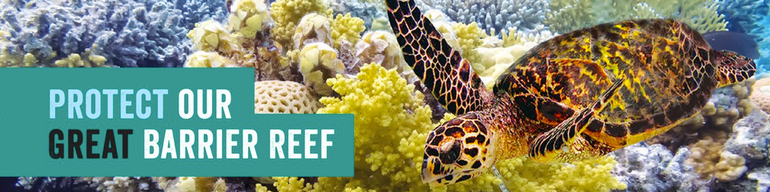
The waters around Abbot Point where the dredging will take place are home to rare and endangered sea turtles, dugongs, snubfin dolphins and in the path of migrating humpback whales. The dredging area is also home to juvenile and spawning fish. Disrupting their breeding cycles could affect the entire reef eco-system including coral reefs.
The dredge spoil will be dumped in disposal ponds located next to the pristine, internationally significant Caley Valley Wetlands. The ponds have unlined bases, and are at risk of overflowing into the wetlands during heavy rains and cyclones. Any water that leaks into the wetlands from the disposal ponds is likely to be high in sediment and nutrients.
Your details will be sent along with your message.

In taking action, I agree to GetUp's Privacy Policy.